18. ANP12: Dark Skies
18.1The Surrey Hills National Landscape policy champions natural darkness and promotes initiatives to reduce light pollution and measures to protect and enhance the dark night1. Artificial light can have a significant detrimental impact on the environment, ecology (particularly nocturnal species) and human health unless appropriately designed and managed. A light pollution map for the parish can be found in MAP O.
18.2Planning Practice Guidance confirms:2 “Artificial light is not always necessary. It has the potential to become what is termed ‘light pollution’ or ‘obtrusive light,’ and not all modern lighting is suitable in all locations. It can be a source of annoyance to people, harmful to wildlife and undermine enjoyment of the countryside or the night sky, especially in areas with intrinsically dark landscapes. Intrinsically dark landscapes are those entirely, or largely, uninterrupted by artificial light.” Policy D12 Development Policy of the GBC Local Plan sets out to provide greater support for sustainable, low impact development.
18.3The Neighbourhood Plan supports Albury as a dark skies parish and the Dark skies policy was supported by parishioners who responded to the Neighbourhood Plan parish consultation 2024 (APPENDIX L).
18.4Many parts of Albury Parish have never had street lighting which means there is a low level of disturbance to both people living in the parish from street lights and also to nature. This makes the parish a good location for star gazing. At present the majority of residents are against installation of street lighting so new housing developments, modifications to the roads, such as traffic calming and other developments in the future should either maintain the “no street lights” policy or use lighting that is designed not to cause light pollution unless there is a justifiable safety reason to do so.
18.5Proposals for all development will be expected to demonstrate how it is intended to minimise light pollution. Information on these measures must be submitted with applications, and an appropriate lighting scheme will be secured by planning condition.
18.6For all proposed developments, factors that will be considered when deciding the appropriateness of artificial lighting, include the location, the hours of operation, the quantity of lights proposed, brightness and control, and direction of the beam.
18.7The Institute of Lighting Professionals (ILP) ‘Guidance Notes for the Reduction of Obtrusive Light’ provides guidance for obtrusive lighting in different Environmental Zones. Being located within the Surrey Hills National Landscape, Albury Parish is considered to be E1 (Natural – Intrinsically Dark). This guidance includes obtrusive lighting limitations for exterior lighting installations and will be used to determine whether proposals for exterior light instillations are likely to have a harmful impact on the parish environment.
18.8The Bat Conservation Trust, in partnership with the Institution for Lighting Professionals (ILP), has published guidance on the consideration of lighting schemes on bats (‘Bats and Artificial Lighting in the UK’ Guidance Note GN 08 23) which should be considered through planning applications.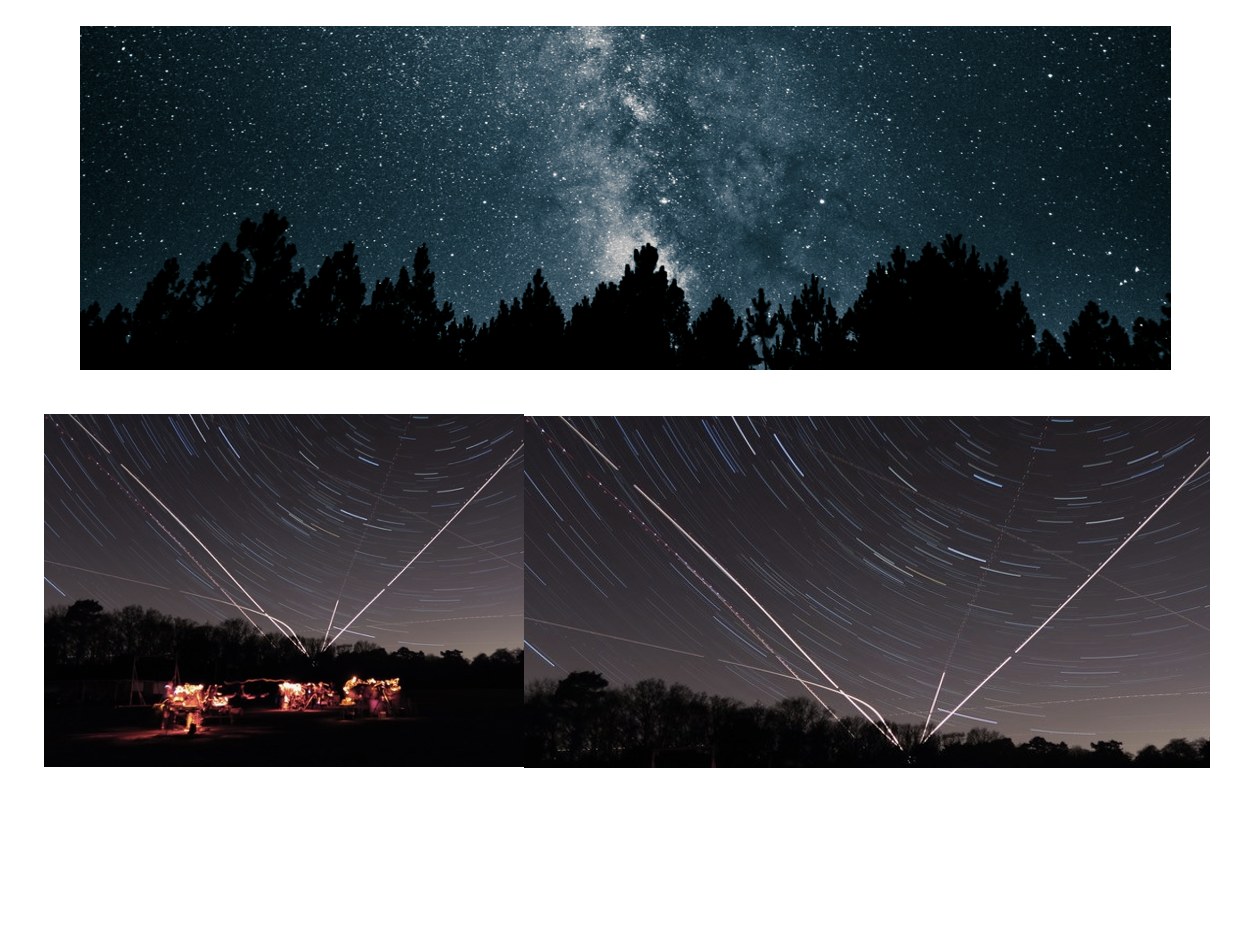
Dark Skies
(Credits Glenn Bates of Guildford Astronomical Soc and free from Unsplash)
Policy ANP12 – Dark Skies
All development proposals should be designed to minimise the occurrence of light pollution.
Excluding householder planning applications, where planning permission is required for exterior lighting installations, planning permission will only be granted where it is demonstrated that:
The external lighting is necessary for safety or security purposes or the essential functioning of a business.
That the external lighting is directed to where it is needed and that light spillage and pollution is minimised, particularly to landscape features and trees, and ecological assets particularly and is not visible outside of the site boundary.
The lighting scheme avoids detracting from the unlit environment and does not exceed Institute for Lighting Professionals obtrusive light limitation guidance for E1 Environment zones.
The impact on wildlife is minimised, including through appropriate design and mitigation in line with best practice guidance.
Where necessary, mitigation measures are incorporated into the scheme to include proximity sensors, timers, angling and shielding of lights etc.